

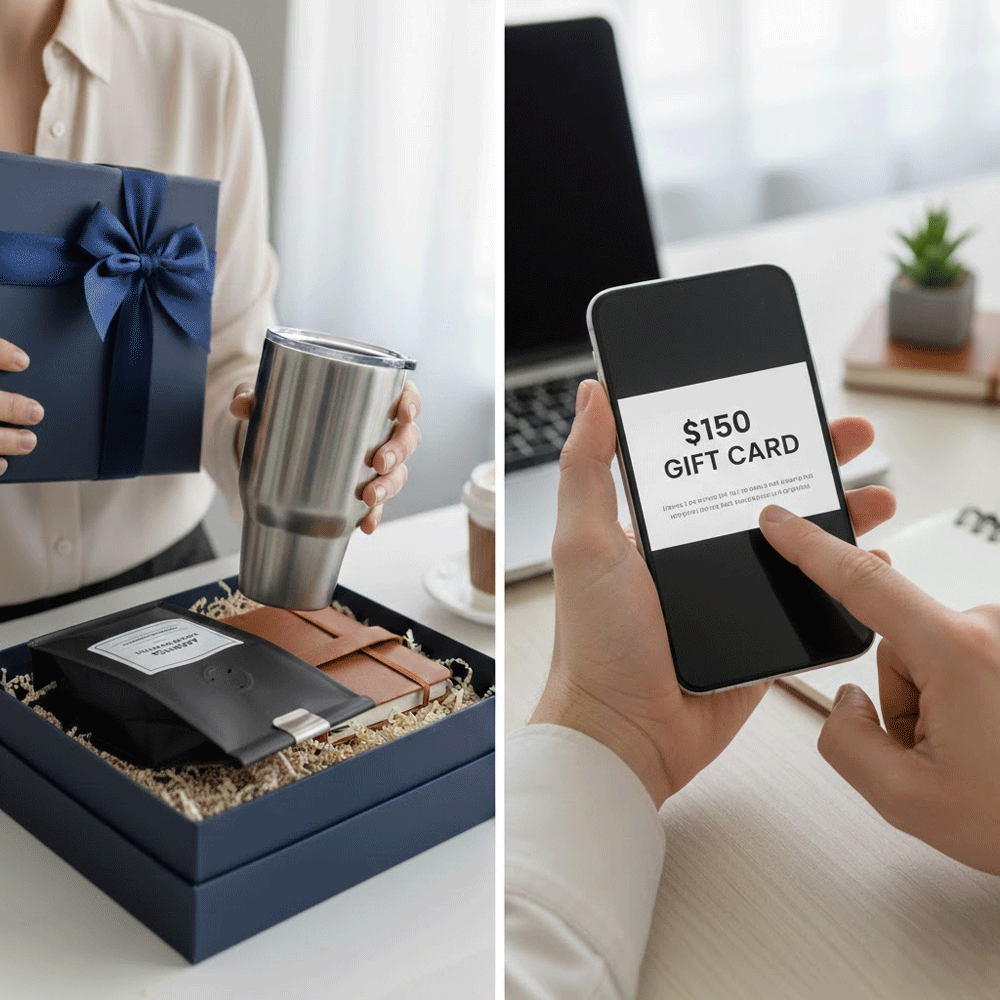
While discounts, digital gift cards or "loyalty points" are convenient for the sender, they carry zero emotional weight for the recipient.
Just think how more special a tailored gift is than receiving a $150 gift card for example. Even if you prefer the option of choosing your own good, in terms of business ROI, it makes so much more sense to gift something tangible.
1. The Psychological "Endowment Effect"
Why does a $100 physical gift feel more valuable than a $150 digital voucher? It’s called the Endowment Effect. Behavioral economists have found that humans assign significantly more value to things they can physically touch and hold. When a curated EspyBox lands on a desk, it immediately becomes "theirs." The moment they unbox it, a psychological bond is formed. A digital code, by contrast, feels like a transaction – and nobody feels an emotional connection to a transaction.
2. Satisfaction is a Metric; Connection is a Moat
Most companies aim for "Customer Satisfaction." But satisfaction is a logical check-box: Did the product work? Yes. "Emotional Connection" is different. It’s predictive. It tells you if a client will stick with you, or at minimum consult you first, when a competitor offers a lower price.
According to research by Motista, customers who are "Emotionally Connected" are 52% more valuable than those who are just "Highly Satisfied." Physical gifting is the bridge between a logic-based business relationship and an emotion-based partnership.
3. The "Shelf Life" of Physicality
A digital voucher has a half-life of about 15 seconds. It’s opened, perhaps used, and then deleted from memory.
A physical, personalized item has permanent "Desk Real Estate."
The Silent Ambassador: Every time that executive reaches for their high-quality notebook or sees that curated item on their shelf, they are reminded of your brand.
Social Proof: Physical gifts get talked about. EAs notice them. Colleagues ask, "Where did you get that?" You aren't just sending a gift; you're starting a conversation in an office you haven't even entered yet.
It’s important to note, the quality of the gift is vital. The items above become irrelevant if gifts aren’t used or of low quality.
4. The "Reciprocity Trigger"
When you send a digital gift card, it feels like an incentive (or worse, a bribe). When you send a thoughtfully curated physical box, it feels like a gesture. Psychologically, humans are hardwired to reciprocate gestures. This is why our clients see such a massive jump in meeting book rates – not because the prospect "bought" the meeting, but because they felt a social obligation to thank the person who sent such a thoughtful "door opener".
We’ve seen incredible results when gifting during the 'final mile' of negotiations, helping move proposals from 'submitted' to 'signed' much faster. One company we work with saw their signed proposal rate jump from 30% to 65% using Espy gifting (a result that even we found staggering). Additionally, they saw a reduction in their sales cycle of over 30 days.


